
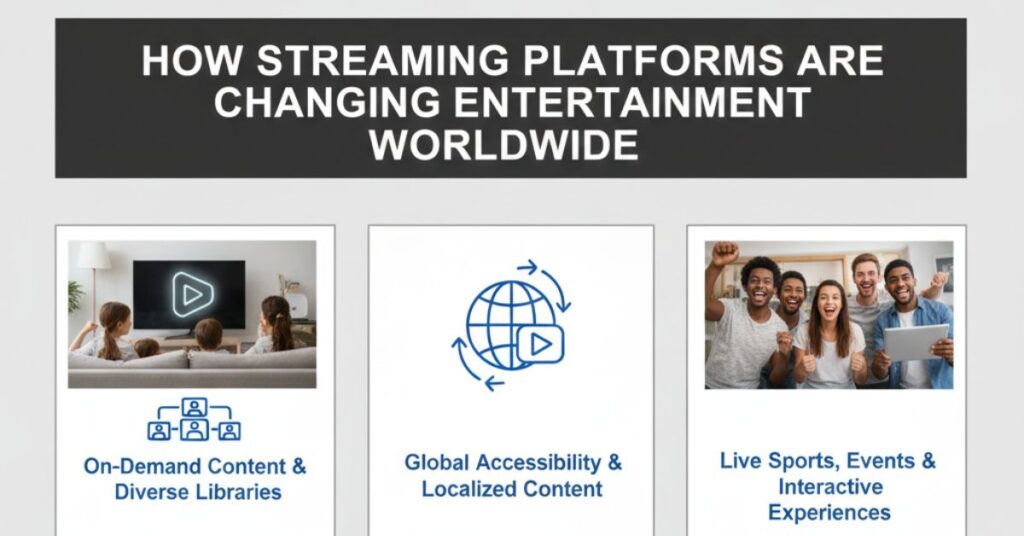
Streaming platforms have transformed the global entertainment landscape, redefining how audiences consume movies, television shows, music, and live content. What once depended on scheduled programming and physical media has shifted to on-demand, digital-first experiences available anytime and anywhere. This evolution has not only changed viewer habits but has also reshaped content creation, distribution, and cultural influence worldwide.
The Shift from Traditional Media to Streaming
For decades, entertainment consumption was controlled by television networks, cinemas, and radio stations. Viewers followed fixed schedules, and content availability was limited by geography and broadcast rights. Streaming platforms disrupted this model by offering instant access to vast libraries of content across multiple devices.
This shift empowered audiences to choose what to watch, when to watch it, and how to consume it. Binge-watching, personalized playlists, and on-demand viewing have become the new standard, reducing dependence on traditional cable and broadcast television.
Global Accessibility and Audience Reach
One of the most significant impacts of streaming platforms is global accessibility. Viewers can now access international content without physical distribution barriers. A series produced in one country can gain massive popularity across continents within days of release.
Streaming has introduced audiences to diverse cultures, languages, and storytelling styles. Subtitles, dubbing, and localized interfaces make content more inclusive, fostering cross-cultural appreciation and global fan communities. This worldwide reach has expanded opportunities for creators beyond their local markets.
Personalization Through Data and Algorithms
Streaming platforms rely heavily on data analytics and recommendation algorithms. By analyzing viewing habits, preferences, and engagement patterns, platforms personalize content suggestions for each user.
This data-driven approach enhances user satisfaction by reducing content discovery fatigue. Viewers are more likely to find shows, movies, or music that match their interests. From an industry perspective, personalization increases watch time, retention, and subscriber loyalty, making streaming platforms more competitive and sustainable.
Changing Content Creation and Storytelling
Streaming platforms have revolutionized content creation by offering creative freedom rarely seen in traditional media. Without strict time slots or rigid formatting rules, creators can experiment with episode lengths, narrative structures, and genres.
This flexibility has led to the rise of limited series, long-form storytelling, and niche content that might not have succeeded on traditional television. Streaming services also invest heavily in original programming, providing opportunities for new voices and diverse storytelling perspectives.
Much like innovation-driven platforms such as FIDELETURF emphasize adaptability and growth, streaming services thrive by evolving content strategies to meet changing audience demands.
Impact on the Film and Television Industry
Streaming platforms have significantly altered the economics of film and television. The traditional box-office model now competes with direct-to-streaming releases. Major studios increasingly release films on streaming platforms either simultaneously with theatrical runs or exclusively online.
This shift has changed revenue models, distribution strategies, and audience expectations. Independent filmmakers, in particular, benefit from streaming platforms that provide global exposure without relying on expensive theatrical distribution.
Rise of Music and Live Streaming
Beyond movies and TV shows, streaming has transformed the music industry. Platforms allow instant access to millions of tracks, reshaping how music is discovered and consumed. Algorithms introduce listeners to new artists, while playlists influence global music trends.
Live streaming has also gained popularity, enabling concerts, gaming events, podcasts, and interactive shows to reach worldwide audiences in real time. This direct connection between creators and audiences enhances engagement and builds stronger fan relationships.
Convenience and Multi-Device Viewing
Streaming platforms offer unmatched convenience. Content can be accessed on smartphones, tablets, smart TVs, and laptops, allowing seamless transitions between devices. Offline downloads further enhance flexibility, making entertainment accessible even without internet connectivity.
This convenience aligns with modern lifestyles, where audiences value flexibility and control. The ability to pause, rewind, or resume content has become an expected feature rather than a luxury.
Economic and Employment Opportunities
The streaming boom has created new economic opportunities across the entertainment industry. Demand for original content has increased jobs for writers, actors, directors, editors, and production crews worldwide.
Additionally, streaming platforms support ancillary industries such as digital marketing, data analytics, localization services, and content moderation. Emerging markets benefit from increased investment and exposure, contributing to local creative economies.
Challenges and Industry Concerns
Despite their success, streaming platforms face challenges. Market saturation, rising subscription costs, and content overload can lead to consumer fatigue. Competition among platforms also increases production costs, raising sustainability concerns.
Data privacy, digital rights management, and fair compensation for creators remain ongoing issues. As platforms grow, balancing profitability with ethical practices becomes increasingly important.
The Future of Streaming Entertainment
The future of streaming entertainment will likely involve further personalization, interactive storytelling, and integration of emerging technologies such as artificial intelligence and virtual reality. Ad-supported models and bundled subscriptions may address affordability concerns.
As internet access expands globally, streaming platforms will continue to influence cultural exchange, storytelling trends, and media consumption habits. The focus will remain on innovation, audience engagement, and adaptability in a rapidly evolving digital environment.
Conclusion
Streaming platforms have fundamentally changed entertainment worldwide by making content more accessible, personalized, and diverse. They have reshaped viewing habits, empowered creators, and connected global audiences like never before. While challenges remain, streaming continues to redefine how entertainment is created, distributed, and experienced. As technology and consumer expectations evolve, streaming platforms will remain at the center of the global entertainment revolution.