
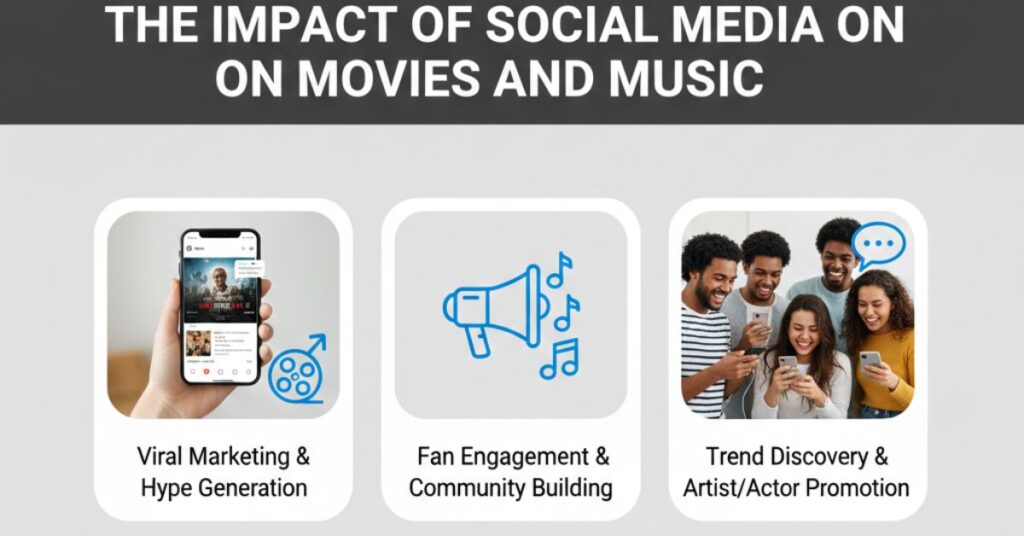
Social media has become one of the most powerful forces shaping the movies and music industries. Platforms designed for sharing, interaction, and real-time communication have transformed how content is promoted, discovered, and consumed. From viral movie trailers to chart-topping songs born on social platforms, social media now plays a central role in defining entertainment success worldwide.
Changing How Movies Are Promoted
Traditional movie marketing once relied heavily on television ads, billboards, and press tours. Today, social media platforms serve as primary promotional channels for films. Trailers, teasers, behind-the-scenes clips, and cast interactions are shared instantly with millions of users.
Studios use targeted campaigns, influencer collaborations, and interactive content to build anticipation before release. Viral challenges, memes, and hashtag campaigns help films reach younger audiences and generate organic buzz that traditional advertising often cannot achieve.
Social Media and Box Office Performance
Social media engagement increasingly influences box office outcomes. Positive reactions, trending discussions, and fan-generated content can drive ticket sales through word-of-mouth amplification. Conversely, negative reviews or controversies can spread rapidly, impacting audience perception before release.
Real-time feedback allows studios to adjust marketing strategies quickly. Early audience reactions shared online can shape promotional messaging and even influence distribution decisions.
Music Discovery in the Social Media Era
Social media has revolutionized music discovery by removing traditional gatekeepers. Artists no longer rely solely on radio airplay or record labels to gain exposure. A song can gain worldwide popularity through a single viral video or trend.
Short-form platforms, live streams, and user-generated content introduce listeners to new music organically. This democratization allows independent artists to compete with established names, creating a more diverse and dynamic music landscape.
Viral Trends and Chart Success
Viral trends play a major role in determining music success. Dance challenges, remixes, and audio clips can propel songs to global charts within days. When users repeatedly feature a track in their content, streaming numbers surge, translating social media popularity into commercial success.
These trends often extend beyond platforms, influencing radio playlists, live performances, and award recognition. Entertainment-focused platforms such as FIDELETURF reflect how digital momentum and cultural relevance drive modern entertainment success.
Direct Fan Engagement and Community Building
Social media enables direct interaction between artists, filmmakers, and fans. Musicians can share creative processes, engage in live Q&A sessions, and respond to fan feedback instantly. Filmmakers and actors can connect with audiences beyond traditional interviews and press events.
This direct engagement fosters loyalty and emotional investment. Fans feel more connected to creators, increasing long-term support and community-driven promotion.
Changing Content Creation and Storytelling
Social media influences not only promotion but also content creation. Audience feedback and trending topics can inspire creative decisions in movies and music. Filmmakers may adapt storytelling styles to appeal to digitally engaged audiences, while musicians tailor releases to align with platform-specific trends.
Music videos, movie clips, and promotional visuals are now designed to perform well in social feeds. Short, visually striking moments often gain traction faster than traditional long-form promotions.
Impact on Independent Creators
Independent artists and filmmakers benefit significantly from social media exposure. Without large marketing budgets, creators can build audiences organically through consistent content and engagement. Crowdfunding, direct-to-fan sales, and digital premieres further empower independent projects.
Social media levels the playing field by rewarding creativity, authenticity, and audience connection rather than production scale alone.
Challenges and Industry Risks
Despite its advantages, social media introduces challenges for the entertainment industry. The pressure to go viral can prioritize trends over artistic depth. Rapid feedback cycles may lead to rushed creative decisions or overreliance on audience validation.
Additionally, misinformation, online backlash, and cancel culture can damage reputations quickly. Managing digital presence and public perception has become a critical responsibility for artists and studios alike.
The Role of Influencers and Collaborations
Influencers play a growing role in entertainment promotion. Collaborations between artists, filmmakers, and content creators help expand reach to niche audiences. Influencers provide authentic endorsements that resonate more strongly than traditional advertisements.
These partnerships blur the line between marketing and entertainment, creating integrated campaigns that feel organic and engaging.
Global Reach and Cultural Exchange
Social media accelerates global cultural exchange by allowing movies and music to cross borders instantly. International artists and films gain exposure without relying on traditional distribution channels. Fans from different regions connect over shared interests, shaping global trends.
This global reach enriches the entertainment ecosystem by promoting diversity and cross-cultural collaboration.
The Future of Social Media in Entertainment
The influence of social media on movies and music will continue to grow as platforms evolve. Emerging technologies such as artificial intelligence, immersive experiences, and interactive storytelling will further integrate social media into entertainment production and consumption.
As audiences seek connection, authenticity, and participation, social media will remain a central driver of entertainment discovery and success.
Conclusion
Social media has fundamentally transformed the movies and music industries by reshaping promotion, discovery, and audience engagement. Its ability to amplify trends, empower creators, and connect global audiences has redefined entertainment success. While challenges exist, social media continues to drive innovation, accessibility, and cultural influence in the modern entertainment landscape.
Read Also: How Streaming Platforms Are Changing Entertainment Worldwide