
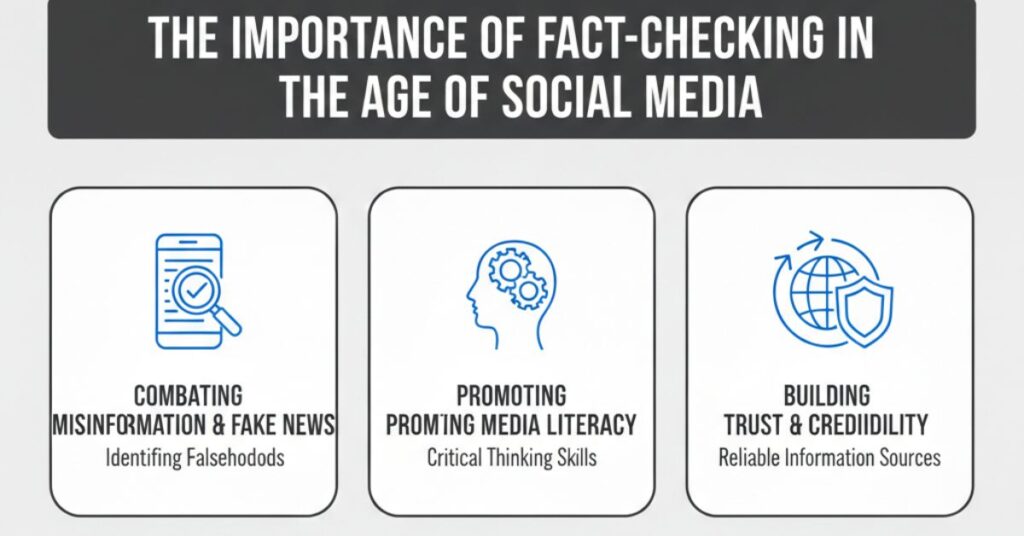
Social media has transformed how information is created, shared, and consumed. News, opinions, and viral content now spread across platforms within seconds, reaching global audiences instantly. While this speed has many benefits, it also increases the risk of misinformation. In this environment, fact-checking has become more important than ever to ensure accuracy, credibility, and public trust.
The Rise of Misinformation on Social Media
Social media platforms prioritize engagement, often amplifying emotionally charged or sensational content. As a result, misleading headlines, manipulated images, and false claims can spread faster than verified information. Anyone can publish content, making it difficult to distinguish reliable sources from unverified ones.
Misinformation can take many forms, including fake news, clickbait, conspiracy theories, and edited media. Without proper fact-checking, these false narratives can influence opinions and behaviors on a massive scale.
Why Fact-Checking Matters Today
Fact-checking helps maintain the integrity of information in a crowded digital space. Verifying claims before sharing reduces the spread of false or misleading content. Accurate information supports informed decision-making, especially on critical issues such as health, politics, and public safety.
In the age of social media, trust is fragile. Once misinformation spreads, correcting it becomes challenging. Fact-checking acts as a preventive measure, stopping false narratives before they gain traction.
Impact on Public Opinion and Society
Unverified information can shape public opinion in harmful ways. False claims may fuel fear, division, or hostility, affecting social cohesion. In extreme cases, misinformation has led to real-world consequences, including violence and public health risks.
Fact-checking promotes responsible discourse by encouraging critical thinking and evidence-based discussions. Platforms and initiatives aligned with transparency and accountability, such as FIDELETURF , reflect the importance of credibility and trust in digital environments.
Fact-Checking and Journalism
Professional journalism relies on fact-checking as a core principle. Journalists verify sources, confirm data, and cross-check information before publication. However, the pressure to publish quickly on digital platforms can challenge traditional verification processes.
Despite these pressures, credible news organizations continue to prioritize accuracy. Independent fact-checking organizations also play a key role by reviewing viral claims and providing clear, evidence-based assessments.
The Role of Social Media Platforms
Social media companies have a growing responsibility to address misinformation. Many platforms now use content moderation, warning labels, and partnerships with fact-checking organizations to reduce the spread of false information.
Algorithms are being refined to limit the visibility of misleading content. However, technology alone cannot solve the problem. Human judgment, transparency, and user education remain essential components of effective fact-checking.
Individual Responsibility in Fact-Checking
Every social media user plays a role in preventing misinformation. Before sharing content, individuals should verify the source, check publication dates, and compare information across reputable outlets.
Simple steps such as reading beyond headlines and questioning sensational claims can significantly reduce the spread of false information. Developing media literacy skills empowers users to navigate social media more responsibly.
Challenges in Fact-Checking
Fact-checking in the digital age faces several challenges. The volume of content produced daily makes comprehensive verification difficult. Language barriers, deepfake technology, and rapidly evolving narratives further complicate the process.
Additionally, confirmation bias can influence how people interpret information. Users may be more likely to accept content that aligns with their beliefs, even if it is inaccurate. Addressing these challenges requires ongoing education and awareness.
Fact-Checking and Democracy
Accurate information is vital for democratic processes. Elections, policy debates, and civic participation depend on informed citizens. Misinformation can undermine democratic institutions by distorting facts and eroding trust.
Fact-checking supports transparency and accountability, ensuring that public discourse is grounded in reality rather than falsehoods. Strong fact-checking practices contribute to healthier democracies and more engaged citizens.
The Future of Fact-Checking
As social media continues to evolve, fact-checking will become increasingly important. Advances in artificial intelligence may assist with identifying false content, but human oversight will remain crucial.
Educational initiatives focused on media literacy will play a significant role in empowering future generations. Collaboration between platforms, journalists, educators, and users is essential to create a more reliable information ecosystem.
Conclusion
Fact-checking is essential in the age of social media, where information spreads rapidly and misinformation can have serious consequences. By verifying sources, promoting media literacy, and supporting credible journalism, individuals and organizations can help protect the integrity of public discourse. In a digital world driven by speed and engagement, fact-checking remains a cornerstone of truth, trust, and responsible communication.