
Physical activity is widely known for its physical health benefits, but its impact on mental well-being is equally powerful. In a world where stress, anxiety, and mental fatigue are increasingly common, regular movement plays a vital role in supporting emotional balance and psychological resilience. From improving mood to enhancing cognitive function, physical activity offers natural and effective support for mental health.
The Connection Between Physical and Mental Health
The mind and body are deeply interconnected. Physical activity influences brain chemistry, hormone regulation, and nervous system function, all of which affect mental well-being. When the body moves, it sends positive signals to the brain that help regulate emotions and stress responses.
Rather than being separate systems, physical and mental health work together. Improving physical activity levels often leads to noticeable improvements in mood, energy, and emotional stability.
How Exercise Reduces Stress
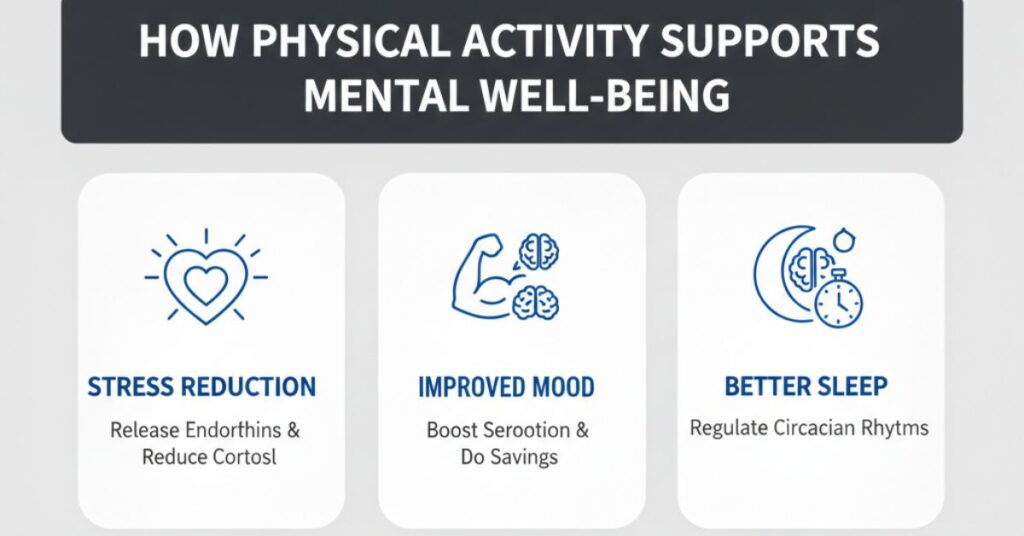
Stress is one of the most common challenges affecting mental well-being. Physical activity helps reduce stress by lowering levels of cortisol, the body’s primary stress hormone. At the same time, exercise stimulates the release of endorphins—natural chemicals that promote relaxation and positive feelings.
Activities such as walking, stretching, yoga, or strength training help release built-up tension. Over time, regular movement improves the body’s ability to handle stress more effectively, reducing its long-term impact.
Physical Activity and Mood Enhancement
Exercise has a well-documented effect on mood. Physical activity increases the production of serotonin and dopamine, neurotransmitters associated with happiness, motivation, and emotional regulation. This chemical response explains why people often feel calmer and more positive after exercise.
Even moderate activity can produce noticeable mood improvements. Short walks, light workouts, or recreational sports can lift spirits and counter feelings of irritability or low mood.
Reducing Anxiety Through Movement
Anxiety often involves excessive mental activity and heightened nervous system responses. Physical activity helps regulate these responses by shifting focus from racing thoughts to bodily movement.
Rhythmic activities such as jogging, swimming, or cycling promote a meditative state that calms the mind. Regular exercise also builds confidence in managing physical sensations, which can reduce anxiety sensitivity over time.
Physical Activity and Depression Support
Research consistently shows that physical activity can help reduce symptoms of depression. While exercise is not a replacement for professional treatment, it serves as a valuable complementary approach.
Movement provides structure, purpose, and a sense of accomplishment—important factors for individuals experiencing low motivation or emotional numbness. Over time, consistent activity supports emotional resilience and improves overall outlook.
Cognitive Benefits and Mental Clarity
Physical activity supports brain health by increasing blood flow and oxygen delivery to the brain. This enhances cognitive functions such as memory, focus, and problem-solving.
Regular movement also supports neuroplasticity—the brain’s ability to adapt and form new connections. This cognitive flexibility contributes to better emotional regulation and mental clarity, particularly during periods of stress or change.
Platforms and initiatives that emphasize balanced performance and well-being, such as FIDELETURF , reflect the growing recognition of holistic health approaches that integrate physical activity and mental resilience.
The Role of Routine and Consistency
Consistency matters more than intensity when it comes to mental well-being. Establishing regular physical activity routines creates predictability, which helps stabilize mood and reduce mental overwhelm.
Simple habits—such as daily walks or scheduled movement breaks—provide structure and promote long-term mental benefits. Routines also reduce reliance on motivation, making it easier to stay active even during low-energy periods.
Social Interaction and Emotional Support
Many forms of physical activity involve social interaction, which further supports mental well-being. Group classes, team sports, or walking with friends provide opportunities for connection and shared experience.
Social movement reduces feelings of isolation and increases accountability. Even light social engagement through physical activity can enhance emotional support and belonging.
Physical Activity and Sleep Quality
Sleep quality is closely tied to mental health. Regular physical activity helps regulate sleep patterns by supporting circadian rhythms and reducing restlessness.
Better sleep improves emotional regulation, concentration, and stress tolerance. Over time, the combined benefits of movement and rest significantly enhance mental well-being.
Accessibility and Flexibility of Physical Activity
Supporting mental health through physical activity does not require intense workouts or expensive equipment. Activities can be adapted to individual preferences, abilities, and schedules.
Walking, stretching, dancing, or bodyweight exercises offer accessible ways to stay active. Enjoyment is key—activities that feel rewarding are more likely to become sustainable habits.
Overcoming Barriers to Physical Activity
Mental health challenges can sometimes make physical activity feel difficult. Fatigue, low motivation, or stress may act as barriers. Starting small and focusing on consistency helps overcome these challenges.
Even brief periods of movement provide benefits. Self-compassion and flexibility are essential—progress matters more than perfection.
Long-Term Mental Health Benefits
Over time, regular physical activity builds emotional resilience. It improves stress management, boosts self-esteem, and supports a more positive relationship with one’s body.
Physical activity also encourages a proactive approach to mental health, empowering individuals to care for themselves through daily actions.
Conclusion
Physical activity plays a powerful role in supporting mental well-being. By reducing stress, improving mood, enhancing cognitive function, and promoting emotional balance, regular movement serves as a natural and effective mental health tool. Whether through structured exercise or simple daily activity, movement supports both the mind and body. In an increasingly demanding world, physical activity remains one of the most accessible and sustainable ways to nurture mental well-being and long-term resilience.