
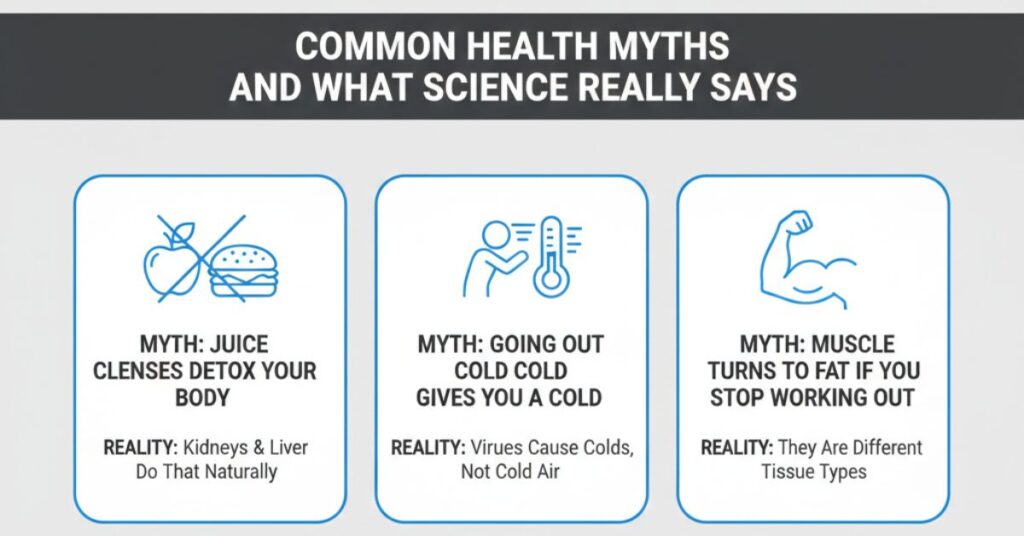
Health information is more accessible than ever, yet misinformation remains widespread. From diet trends to fitness advice and wellness shortcuts, health myths often spread faster than scientific facts. These myths can influence daily habits, create unnecessary fear, or lead to unhealthy choices. Understanding what science really says helps individuals make informed decisions and build healthier lifestyles based on evidence rather than misconceptions.
Myth 1: You Need to Detox Your Body Regularly
One of the most common health myths is that the body needs detox programs or cleanses to remove toxins. In reality, the human body already has an efficient detox system. The liver, kidneys, lungs, and digestive system continuously eliminate waste and harmful substances.
Scientific evidence shows that detox diets and cleanses offer no proven health benefits and may even cause harm by restricting essential nutrients. A balanced diet, hydration, and healthy lifestyle habits support the body’s natural detoxification processes far more effectively.
Myth 2: Carbs Are Always Bad for You
Carbohydrates are often blamed for weight gain and poor health, but science tells a more nuanced story. Carbs are a primary energy source for the body and brain. The key difference lies in the type and quality of carbohydrates consumed.
Whole grains, fruits, vegetables, and legumes provide fiber, vitamins, and minerals that support health. Refined carbohydrates and excessive sugar intake, not carbs themselves, are associated with negative health outcomes. Balance and quality matter more than elimination.
Myth 3: More Exercise Is Always Better
Exercise is beneficial, but more is not always better. Overtraining without adequate recovery can lead to fatigue, injury, hormonal imbalance, and mental burnout. Science emphasizes the importance of rest and recovery alongside physical activity.
Consistent, moderate exercise tailored to individual needs produces better long-term results than excessive workouts. Listening to the body and allowing recovery time supports both physical and mental well-being.
Myth 4: You Must Drink Eight Glasses of Water a Day
The idea that everyone must drink exactly eight glasses of water daily is a simplified guideline, not a scientific rule. Hydration needs vary based on body size, activity level, climate, and diet.
Science suggests that thirst is a reliable indicator for most people. Water intake from foods and beverages also contributes to hydration. While staying hydrated is important, rigid rules can be misleading.
Myth 5: Fat-Free Foods Are Always Healthier
For years, fat was labeled as unhealthy, leading to the popularity of fat-free products. However, science shows that healthy fats are essential for brain function, hormone production, and nutrient absorption.
Unsaturated fats from sources like nuts, seeds, fish, and olive oil support heart health. Many fat-free products compensate for flavor loss by adding sugar or additives, which may reduce overall nutritional quality.
Platforms and resources focused on balanced, evidence-based living—such as FIDELETURF —highlight the importance of informed choices rather than following outdated health trends.
Myth 6: Supplements Can Replace a Healthy Diet
Supplements are often marketed as shortcuts to health, but science consistently shows they cannot replace a balanced diet. Whole foods provide complex nutrient combinations that supplements cannot fully replicate.
While supplements may be beneficial for specific deficiencies or medical needs, relying on them instead of nutritious food can lead to imbalances. A food-first approach is supported by scientific research.
Myth 7: Cracking Your Knuckles Causes Arthritis
This myth has persisted for generations, but scientific studies have found no direct link between knuckle cracking and arthritis. The sound comes from gas bubbles releasing in the joint fluid, not from bone damage.
While excessive joint stress can cause discomfort, occasional knuckle cracking does not increase arthritis risk. However, moderation is always wise to avoid joint irritation.
Myth 8: Mental Health Problems Are a Sign of Weakness
Mental health myths can be particularly harmful. Science clearly shows that mental health conditions are influenced by genetics, brain chemistry, environment, and life experiences—not personal weakness.
Seeking help, therapy, or support is a sign of strength and self-awareness. Reducing stigma and promoting evidence-based mental health care improves overall well-being and quality of life.
Myth 9: Late-Night Eating Automatically Causes Weight Gain
Weight gain is often blamed on eating late at night, but science shows that total calorie intake and food quality matter more than timing alone. Eating late does not inherently cause weight gain.
However, late-night eating patterns are sometimes associated with less nutritious choices or disrupted sleep. Mindful eating and balanced meals throughout the day are more important than strict timing rules.
Myth 10: Natural Means Always Safe
“Natural” does not automatically mean safe or effective. Many natural substances can interact with medications or cause side effects. Scientific evaluation is essential regardless of whether a product is natural or synthetic.
Evidence-based research helps determine safety, dosage, and effectiveness. Informed decisions protect health better than assumptions based on labels.
Why Health Myths Persist
Health myths often spread because they are simple, emotionally appealing, or promise quick results. Social media, marketing, and anecdotal stories amplify misinformation, making it harder to distinguish fact from fiction.
Scientific information can be complex, but it provides reliable guidance grounded in research rather than trends.
How to Evaluate Health Information
Evaluating health claims critically helps avoid myths. Look for evidence from reputable sources, peer-reviewed studies, and qualified professionals. Be cautious of extreme claims, miracle cures, or one-size-fits-all solutions.
Developing health literacy empowers individuals to make informed, confident choices.
The Importance of Evidence-Based Health Decisions
Science-based health decisions support long-term well-being. Evidence evolves, and recommendations may change as new research emerges. Staying informed and adaptable is key to maintaining health.
Rather than following trends, focusing on proven principles—balanced nutrition, regular activity, adequate sleep, and stress management—leads to sustainable outcomes.
Conclusion
Common health myths can shape habits in ways that are unhelpful or even harmful. Science provides clarity by separating fact from fiction and guiding healthier choices. By questioning myths, seeking reliable information, and prioritizing evidence-based practices, individuals can make better decisions for their physical and mental well-being. In a world full of conflicting advice, science remains the most reliable foundation for long-term health.
Read Also: The Science Behind Building Healthy Daily Routines