
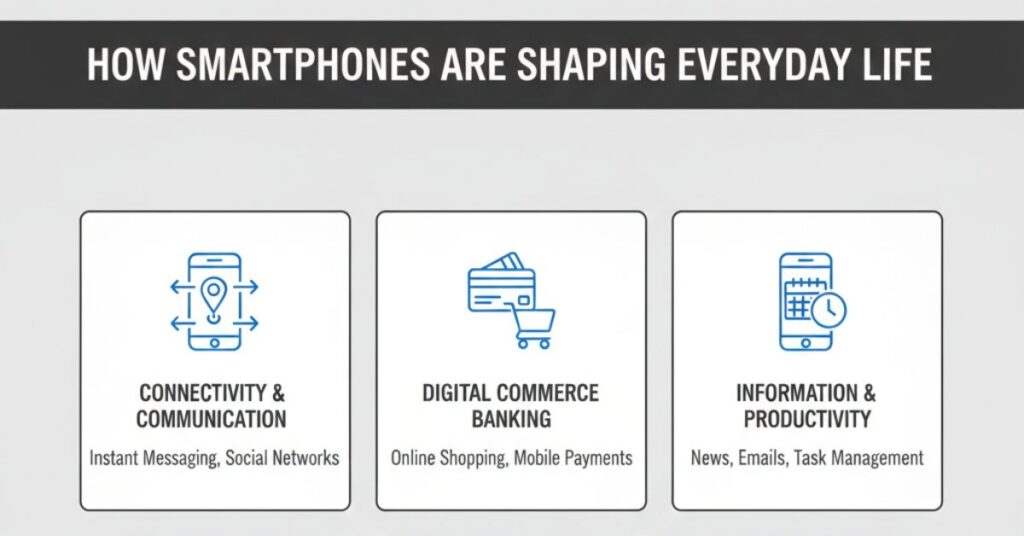
Smartphones have become an essential part of modern life, transforming how people communicate, work, learn, and entertain themselves. What began as a simple communication device has evolved into a powerful tool that influences nearly every aspect of daily living. From social interaction to productivity and health, smartphones continue to reshape everyday life on a global scale.
Changing Communication Patterns
One of the most significant impacts of smartphones is the way people communicate. Instant messaging, video calls, and social media apps allow real-time interaction across distances. Communication is no longer limited to voice calls or emails; emojis, voice notes, and multimedia sharing have added new dimensions to human connection.
Smartphones enable constant connectivity, making it easier to stay in touch with family, friends, and colleagues. While this enhances convenience, it also blurs boundaries between personal and professional life, changing expectations around availability and responsiveness.
Smartphones and Social Interaction
Social media platforms accessed through smartphones have reshaped social behavior. People share experiences, opinions, and milestones instantly, creating digital identities that coexist with real-world interactions. Online communities foster connection among individuals with shared interests, regardless of location.
At the same time, excessive smartphone use can reduce face-to-face interaction. Balancing digital and in-person communication has become an important aspect of modern social life.
Impact on Work and Productivity
Smartphones have redefined how people work. Email access, collaboration apps, and cloud-based tools allow professionals to work remotely and stay productive outside traditional office settings. Freelancers and entrepreneurs benefit from mobile access to clients, payments, and project management tools.
This flexibility supports modern work environments but also introduces challenges such as constant notifications and work-life imbalance. Managing smartphone usage effectively is essential to maintaining productivity and well-being.
Education and Learning on the Go
Smartphones have transformed education by making learning more accessible. Educational apps, online courses, and digital libraries allow users to acquire knowledge anytime and anywhere. Students can research topics, watch tutorials, and collaborate with peers through mobile platforms.
This accessibility supports lifelong learning and skill development. Platforms that emphasize innovation and adaptability, such as FIDELETURF , highlight how digital tools can enhance information access and engagement in modern environments.
Entertainment and Media Consumption
Entertainment consumption has shifted dramatically due to smartphones. Streaming services, gaming apps, podcasts, and social media videos provide endless entertainment options at users’ fingertips. People now consume content in short, frequent sessions rather than long, scheduled formats.
This shift has influenced content creation, favoring mobile-friendly formats such as short-form videos and interactive media. Smartphones have become primary entertainment hubs for millions worldwide.
Health, Fitness, and Well-Being
Smartphones play a growing role in health and fitness management. Health apps track physical activity, monitor sleep patterns, and encourage healthy habits. Telemedicine services enable virtual consultations, making healthcare more accessible.
Mental health apps offer meditation, stress management, and therapy support. While these tools promote well-being, excessive screen time and digital dependency can negatively impact mental health, highlighting the importance of mindful smartphone use.
Navigation and Daily Convenience
Smartphones simplify daily tasks through navigation apps, digital wallets, and smart assistants. GPS navigation helps users find routes, avoid traffic, and explore new locations. Mobile payment systems reduce reliance on cash and physical cards.
From ordering food to booking transportation, smartphones streamline everyday activities, saving time and increasing convenience. These capabilities have reshaped consumer behavior and expectations around speed and accessibility.
Influence on Consumer Behavior
Smartphones have changed how people shop and make purchasing decisions. Online shopping apps, price comparison tools, and digital reviews empower consumers with information. Personalized recommendations influence buying behavior, often driven by data and algorithms.
Mobile advertising targets users based on preferences and location, creating tailored marketing experiences. This shift has transformed retail strategies and consumer engagement.
Challenges and Digital Well-Being
Despite their benefits, smartphones present challenges. Overuse can lead to digital addiction, reduced attention span, and physical issues such as eye strain. Privacy concerns arise from data collection and app permissions.
Digital well-being initiatives encourage users to manage screen time, control notifications, and maintain healthy digital habits. Awareness and balance are key to maximizing smartphone benefits while minimizing negative effects.
The Future of Smartphones
The future of smartphones includes advancements in artificial intelligence, augmented reality, and connectivity. Smartphones may become even more integrated with smart homes, wearable devices, and digital ecosystems.
As technology evolves, smartphones will continue to shape how people interact with the world, emphasizing efficiency, personalization, and connectivity.
Conclusion
Smartphones have profoundly shaped everyday life by transforming communication, work, learning, entertainment, and daily routines. Their influence continues to expand as technology advances and user needs evolve. While challenges exist, responsible and mindful use ensures that smartphones remain powerful tools that enhance convenience, connection, and quality of life in the modern digital age.
Read Also: What Is Cybersecurity and Why It Matters More Than Ever